Showing posts with label "butterfly photography". Show all posts

Sunday, October 30, 2011

Selec a good place to photograph butterflies

The first thing you should know is that you will get to photograph different species of butterflies in different habitats, and if you know the behavior and habitat type in which the butterfly moves, it will be easier to get a picture of the kind you want.


The sandy shores of rivers, puddles of water on dirt roads and swamped sites are a good place to find species of Pieridae (sulphurs and whites) and Papilionidae (swallowtails) and especially if these water sources are close to a forest.


Swallowtail Heraclides androgeus indurt road

Leptophobia whites in a a river border

Places where cattle and horses meet or move are very good as the urine and feces attract butterflies especially of the families Nymphalidae and Riodinidae.

A brushfoot Marpesia iole in a wet place
Edges of unpaved roads with lots of vegetation and especially flowering plants attract all species of butterfly families, when selecting these paths is preferable those without much movement of vehicles, so they don’t scare the butterflies as they pass.


To shoot some species of Satirinidae or Ithomidaes you need to go into the woods, because many of these species are close to the ground or in this type of shaded environment with less light.


 These Satyrinidae is always in the forest floor, Pierella luna
 If you are looking specifically for Lycaenidaes (hairstreaks) advantage that these have a hilltoping behavior, that means placing on in high places, I will devote an entire article to this issue.


Seleccione un buen lugar para fotografiar mariposas
Lo primero que Usted debe saber es que se logra fotografiar distintas especies de mariposas en diferentes hábitats, y si conoce el comportamiento y el tipo de hábitat en el que la mariposa se mueve, será más fácil obtener la foto de la especie que desea.

Las orillas arenosas de los ríos, charcos de agua en las carreteras de tierra y sitios empantanados son un buen lugar para encontrar especies de las familias Piéridae y Papilionidae y especialmente si estas fuentes de agua están cerca a algún bosque.

Papilio Heraclides paeon en camino
Lugares donde se reúnen o por donde transitan vacas y caballos son muy buenos pues la orina y las heces de estos animales atraen mariposas especialmente de las familias Nymphalidae y Riodinidae.

La ninfalide Marpesia corinna en un lugar humedo
Bordes de caminos sin pavimentar con mucha vegetación y especialmente con plantas con flores atraen especies de todas las familias de mariposas, al seleccionar estos caminos es preferible aquellos que no tengan mucha circulación de vehículos para que no espanten las mariposas al pasar.
Agua, bosque y flores la combinacion perfecta
 Para fotografiar algunas especies de Ithomidaes y de Satirinidae es necesario entrar en el bosque pues muchas de estas especies están cerca al suelo o en este tipo de ambiente sombrío con menos luz. 
Ithomides están en el interior del bosque en zona sombreada
 Si busca específicamente Lycaenidaes aproveche el comportamiento que estas tienen de “hilltoping” que significa situarse en lugares altos, dedicaré un artículo completo a este tema.

Friday, June 10, 2011

Butterfly Screensaver

I want to share this butterfly photos to be used as screensaver. All of these photos were taken in Colombia in free butterflies in their natural habitat.
You create a file with any name you want like “Butterfly photos” and place there the photos you like, then in the properties of the screen you chose this file as screensaver.
You can download in Picasa the full size is 1600 x 1100 pixels in web album “Butterfly screensaver” https://picasaweb.google.com/112829544761863671019/ButterflyScreensaver?feat=directlink


Hamadryas amphinome

Vettius coryna
Epiphile orea

Rhetus dysonii

Diaethria neglecta

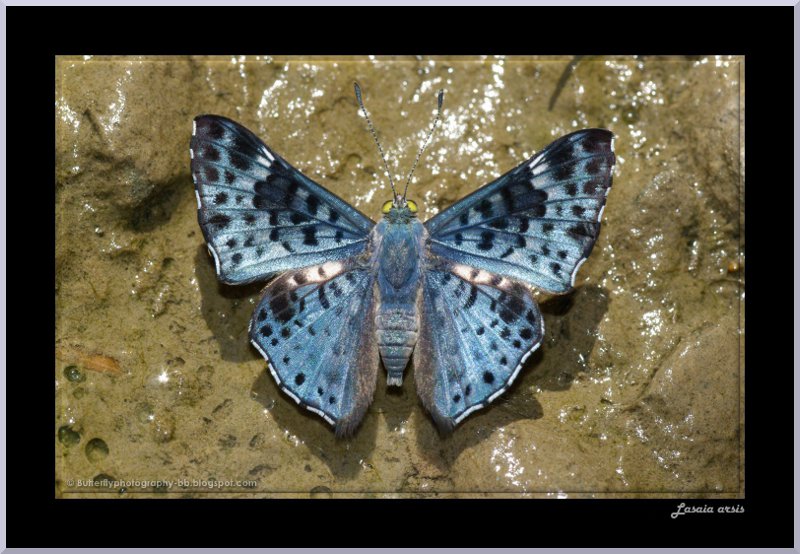
Lasaia arsis


Heliconius charitonius

Arawacus leucogyna

Hypanartia kefersteini

Dismorphia crisia

https://picasaweb.google.com/112829544761863671019/ButterflyScreensaver?feat=directlink
Protector de pantalla de mariposas
Quiero compartir estas fotos de mariposas para ser utilizadas como protector de pantalla. Todas estas fotos fueron tomadas en Colombia en mariposas libres en su hábitat natural.
Cree un archivo con cualquier nombre que desee, como "Fotos mariposas" y coloque allí las fotos que le gustan y en las propiedades de la pantalla se elige este archivo como protector de pantalla.
Usted puede descargar en Picasa el tamaño completo es 1600 x 1100 píxeles en el álbum web "Butterfly screensaver”.


Thursday, January 27, 2011

Keep a parallel (butterfly – camera) always in mind


When you are taking macro photos the depth of field is very small, therefore photos of insects or objects can be easily out of focus.

If you want to get completely focused pictures of butterflies, you should always try to put the camera parallel to the wings, in that way you get the entire insect in focus, you draw two imaginary lines one in the butterfly plane you are aiming and the other in front of the lens or the camera sensor.
Parallel between camera and butterfly ventral in shot

In the ventral shot focusing in the head area will let you get the eyes, legs, wings and at least one antenna in focus, because almost always these parts of the butterfly are in the same plane.
Oxeoschistus simplex

This is especially true in ventral (completely closed wings) or dorsal (full open wings) where there are just a few millimeters in depth.


Front and ventral view of Anteros kupris

In dorsal shots I focus always in the head in that way I am framing the butterfly center and if it is fully open it should be level and you will get both wings in focus.

Sunday, January 16, 2011

Why articulated screen – Part I Ground level

Almost all my photos are taken trough the screen (99.5%) and the decision of what camera to buy for taking butterfly photos was decided for cameras that had articulated screens.

At the beginning there where in the market only Olympus, Panasonic and Sony the brands with large sensors (four thirds or APS type) and articulated screens. I chose the Sony on the screen and the excellent autofocus with dual sensor in some models.  Every day there are more models from other companies that have this type of screen and I hope one day all professional cameras, including full format, will have articulates screens. At least for me and for all type of butterfly photography it is a must.

There are four situations in which articulated screen cameras have relevant advantages over cameras without this type of display and in some of them without this attachment is almost impossible to take a picture of the butterfly.
First when the butterfly sits under a leaf near the ground or in low places, second when the butterfly is found high above the head, in third place in difficult places and the fourth when the butterfly is at ground level.
In this first post I explain the situation when the picture of the butterfly is taken on the ground.
The location of butterflies at ground level is easy to find, is especially common in muddy areas for some families like pieridaes, some skippers, papilionidaes and nymphalides, also with nymphalides and some riodinides (metalmarks) on horse or cattle manure in country roads.
The articulated screen is a great advantage in this situations, despite geting the same photographic results, the way to do it is very different and far more convenient, especially if the soil is wet, full of ants, thorns or broken glass.
The photo sequence below shows one of my fellow in photography, Martin Moreno, making a picture of a leaf butterfly, which was sitting on horse dung in the middle of a rural road.

If you follow tip number one on my blog, take the picture with the sensor always parallel to the butterfly wing, this is the technique that Martin uses with his camera without articulated LCD screen. I'll try to find some photos of Martin in a damp place (you don’t want him in the car after
My technique is what you see in the pictures (taken by Martin) where you can see the position much more convenient to take the same butterfly. In another post I will go deep into what I use to protect the knee and the type of support I use in this photographic situation.

The final result, a nice cropped photo of this Zaretis ellops, with the transparent "holes" in the wings.

Zaretis ellops, male


¿Por qué la pantalla articulada? - parte I fotografía a nivel del piso
Casi todas mis fotos las tomo a través de la pantalla (99,5%) y la decisión de qué cámara comprar para tomar fotos de mariposas la tome solo entre las cámaras que tenían pantalla articulada.
En un principio en el mercado sólo había oferta de cámaras con pantalla articulada y sensor grande (tipo cuatro tercios o APS) por parte de Olympus, Panasonic y Sony.  Yo elegí la Sony por la pantalla y el excelente enfoque automático con su sensor de doble en algunos de los modelos. Cada día son más los modelos de las otras compañías que tienen este tipo de pantalla y espero que algún día todas las cámaras profesionales, incluidas las de formato completo, tendrá pantalla articula. Al menos para mí y para todo tipo de fotografía de la mariposa es una necesidad,
Hay cuatro situaciones en las que las cámaras con pantalla articulada tienen ventajas relevantes sobre cámaras sin este tipo de pantalla y en algunas de ellas sin este aditamento es casi imposible tomar la foto de la mariposa.
En primer lugar cuando la mariposa se posa por debajo de una hoja muy cerca del suelo o en lugares bajos, en segundo lugar cuando la mariposa se encuentran alto por encima de la cabeza, en tercer lugar en lugares complicados y la cuarta cuando la mariposa esta a nivel del suelo.
En este primer artículo explico la situación cuando se toma la foto en el suelo.
La ubicación de mariposas a nivel del suelo es fácil de encontrar, es especialmente común en las zonas fangosas para algunas familias como piérides, algunas hespérides, papiliónidos y ninfálidos, también en el estiércol caballo o de ganado en las carreteras con ninfálidos y algunos riodínidos.
La pantalla articulada es una gran ventaja en esta situación, a pesar de obtener los mismos resultados fotográficos, la forma de hacerlo es muy diferente y mucho más conveniente, especialmente si el suelo está húmedo, lleno de hormigas, espinas o vidrios rotos.
La secuencia fotográfica a continuación muestra a uno de mis compañeros de fotografía, Martin Moreno, haciendo una foto de una mariposa tipo de hoja, que estaba posada en estiércol de caballo en medio de un camino rural.


Si quieres seguir el consejo número uno de mi blog, tomar la foto con el sensor siempre paralelo a la mariposa, esta es la técnica que Martin utiliza con su cámara sin pantalla articulada. Voy a tratar de encontrar algunas fotos de Martin en un lugar húmedo (a quien no querrás en el coche después de haber terminado con el viaje fotográfico).


Mi técnica es lo que ves en las fotos (tomadas por Martín) donde se puede ver la postura mucho más cómoda para tomar la misma mariposa, en otro post voy a profundizar en lo que utilizo para la protección de la rodilla y el tipo de apoyo que uso en esta situación fotográfica.

Zaretis ellops, Martin's photo
El resultado final, una foto recortada de la mariposa Zaretis ellops, con sus dos "huecos" transparentes en las alas.

Thursday, January 6, 2011

Take same individual from different angles

All the butterflies have at least two angles that I usually photograph, one with open wings (dorsal view) and the other with the wings closed (ventral view).
Agraulis vanillae, dorsal

Agraulis vanillae, ventral

However in some cases the butterfly gives you many angles or points of view that you should take the opportunity to photograph.


Having this tip on mind, you will achieve interesting photos and some of them will look like a completely different animal.

Tome el mismo individuo desde diferentes ángulos
Todas las mariposas tienen al menos dos ángulos que generalmente fotografío, uno con las alas abiertas (vista dorsal) y el otro con las alas cerradas (vista ventral).
Sin embargo, en algunos casos, la mariposa le da muchos ángulos o puntos de vista que Usted debe tomar la oportunidad de fotografiar.
Teniendo este consejo en mente, Usted logrará fotos interesantes y algunas de ellas se verán como un animal completamente diferente.

Sunday, January 2, 2011

Only one butterfly at a time

It often happens that at the same time you have several butterflies to photograph; you have to decide which one to choose, because if you try to take photos to each one sometimes you end up with nothing.
My order of priorities, first if it is a lifer or a difficult butterfly to take a photo, second if there are several of the same I look for the one in better condition, third I go for the one that has the best background.
I also take a far away photo of the whole place so I get all of them in one picture in case some important butterfly flies away.


Heliconius doris

In these case I chose the blue one, at the end I took the red too but it wasn’t in perfect condition.This species of Heliconius have several forms: blue, red and yellow green.


Heliconius doris
 
In the second example it was easy to choose the one that was in good condition.
Heliconius ethillia

Heliconius ethillia


Sólo una a la vez
A menudo sucede que al mismo tiempo, Usted tiene varias mariposas para fotografiar, entonces tiene que decidir cuál elegir, porque si trata de tomar fotos a cada una a veces se termina sin nada.

Mi orden de prioridades, en primer lugar si es la primera vez que ve esa especie o es una mariposa difícil tomarle foto, en segundo lugar, si hay varios de la misma especie busco la que está en mejores condiciones, en tercer lugar la que tiene el mejor fondo.

También tomo una foto de lejos de todo el lugar, así logro tomar todo el grupo en una sola imagen en caso de que algún espécimen importante se vuele.

En este caso he elegido la mariposa azul, al final pude tomar la roja también, pero no estaba en perfectas condiciones. Esta especie de Heliconius tiene varias formas con colores azul, rojo y verde amarillo.

En el segundo ejemplo fue fácil elegir la que estaba en buenas condiciones.