Showing posts with label "fotos de mariposas". Show all posts

Friday, June 10, 2011

Butterfly Screensaver

I want to share this butterfly photos to be used as screensaver. All of these photos were taken in Colombia in free butterflies in their natural habitat.
You create a file with any name you want like “Butterfly photos” and place there the photos you like, then in the properties of the screen you chose this file as screensaver.
You can download in Picasa the full size is 1600 x 1100 pixels in web album “Butterfly screensaver” https://picasaweb.google.com/112829544761863671019/ButterflyScreensaver?feat=directlink


Hamadryas amphinome

Vettius coryna
Epiphile orea

Rhetus dysonii

Diaethria neglecta

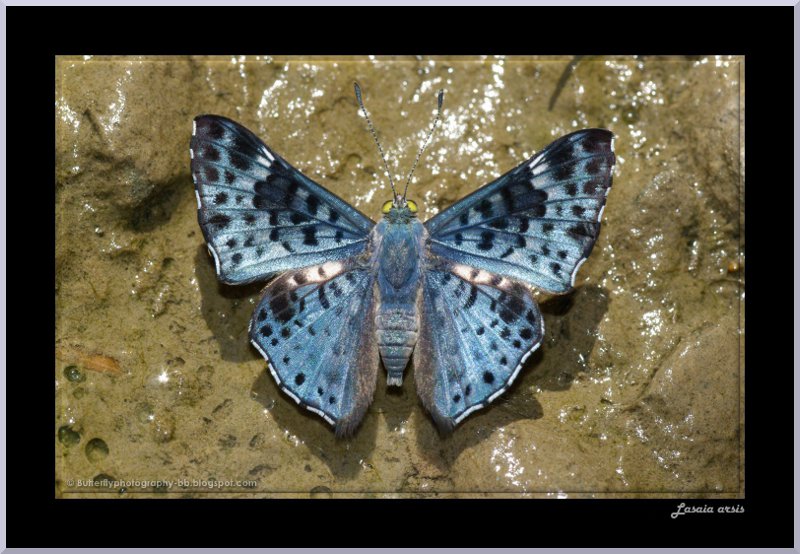
Lasaia arsis


Heliconius charitonius

Arawacus leucogyna

Hypanartia kefersteini

Dismorphia crisia

https://picasaweb.google.com/112829544761863671019/ButterflyScreensaver?feat=directlink
Protector de pantalla de mariposas
Quiero compartir estas fotos de mariposas para ser utilizadas como protector de pantalla. Todas estas fotos fueron tomadas en Colombia en mariposas libres en su hábitat natural.
Cree un archivo con cualquier nombre que desee, como "Fotos mariposas" y coloque allí las fotos que le gustan y en las propiedades de la pantalla se elige este archivo como protector de pantalla.
Usted puede descargar en Picasa el tamaño completo es 1600 x 1100 píxeles en el álbum web "Butterfly screensaver”.


Thursday, January 27, 2011

Keep a parallel (butterfly – camera) always in mind


When you are taking macro photos the depth of field is very small, therefore photos of insects or objects can be easily out of focus.

If you want to get completely focused pictures of butterflies, you should always try to put the camera parallel to the wings, in that way you get the entire insect in focus, you draw two imaginary lines one in the butterfly plane you are aiming and the other in front of the lens or the camera sensor.
Parallel between camera and butterfly ventral in shot

In the ventral shot focusing in the head area will let you get the eyes, legs, wings and at least one antenna in focus, because almost always these parts of the butterfly are in the same plane.
Oxeoschistus simplex

This is especially true in ventral (completely closed wings) or dorsal (full open wings) where there are just a few millimeters in depth.


Front and ventral view of Anteros kupris

In dorsal shots I focus always in the head in that way I am framing the butterfly center and if it is fully open it should be level and you will get both wings in focus.

Saturday, November 20, 2010

Take every opportunity

Some times when you are in the field you don´t take a photo of a butterfly because you think you already have a good shoot of this species. But you have always to remember that some butterflies have a surviving strategy and evolution to mimic o copy the shape and colors of others butterflies. This is called Mullerian ring and Batesian mimic. So the recommendation is to take every butterfly that allows you to get close, if you lose the opportunity this could be the only picture of this species in the word.

As an example the following photos ilustrate how close some species are, they all belong to the genus Astraptes, of the family Hesperiidae. Down butterflies of the genus Adelpha that has 85 species most of them with orange and white marks in different proportions.

Astraptes brevicauda

Astraptes egregius

Astraptes fulgerator

Astraptes latimargo

They all look similar but with the photos is easy to tell the differences, but in the field this is not the case, specially in the tropics where the amount of species is great.

Aproveche cada oportunidad
Algunas veces cuando se encuentre en el campo no se toma una foto de mariposa porque se cree que ya se tiene una Buena toma de esta especie. Pero recuerde siempre que algunas mariposas tienen como estrategia de supervivencia y evolución el copiar la forma y color de otras mariposas. Este fenómeno es llamado anillo Mulleriana y mímica Batesiana. Luego la recomendación es tomar cada mariposa que le permita acercarse, si se pierde la oportunidad esta puede ser la única foto de esta especie.

Hay 85 especies del genero Adelpha, la mayoria tienen manchas naranja y blancas en diferentes proporciones.

Adelpha cytherea

Adelpha boeotia

Adelpha erotia

Adelpha collina


Adelpha olynthia
Como ejemplo se colocaron fotos de especies del genero Astraptes de la familia Hesperiidae, estas tienen pequeñas diferencias que son fáciles de observar en las fotos pero no es el caso en el campo y especialmente en los trópicos donde la diversidad es mayor.