Showing posts with label macrofotografia. Show all posts

Friday, June 10, 2011

Butterfly Screensaver

I want to share this butterfly photos to be used as screensaver. All of these photos were taken in Colombia in free butterflies in their natural habitat.
You create a file with any name you want like “Butterfly photos” and place there the photos you like, then in the properties of the screen you chose this file as screensaver.
You can download in Picasa the full size is 1600 x 1100 pixels in web album “Butterfly screensaver” https://picasaweb.google.com/112829544761863671019/ButterflyScreensaver?feat=directlink


Hamadryas amphinome

Vettius coryna
Epiphile orea

Rhetus dysonii

Diaethria neglecta

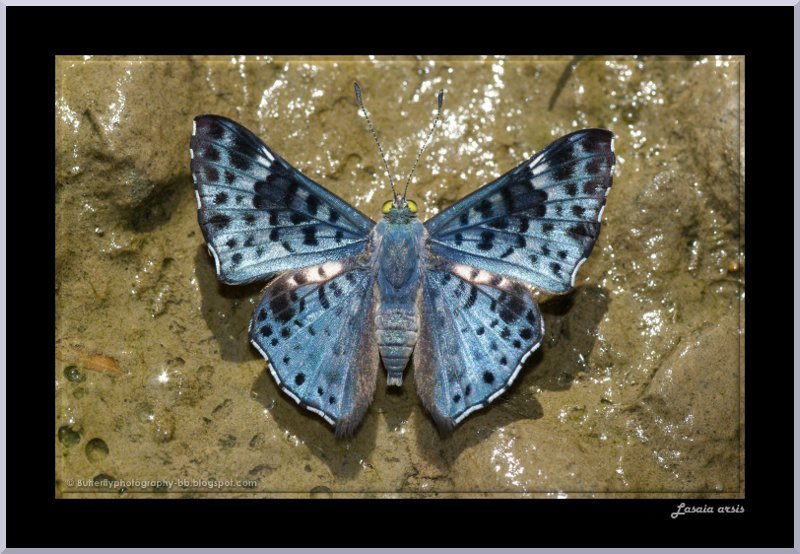
Lasaia arsis


Heliconius charitonius

Arawacus leucogyna

Hypanartia kefersteini

Dismorphia crisia

https://picasaweb.google.com/112829544761863671019/ButterflyScreensaver?feat=directlink
Protector de pantalla de mariposas
Quiero compartir estas fotos de mariposas para ser utilizadas como protector de pantalla. Todas estas fotos fueron tomadas en Colombia en mariposas libres en su hábitat natural.
Cree un archivo con cualquier nombre que desee, como "Fotos mariposas" y coloque allí las fotos que le gustan y en las propiedades de la pantalla se elige este archivo como protector de pantalla.
Usted puede descargar en Picasa el tamaño completo es 1600 x 1100 píxeles en el álbum web "Butterfly screensaver”.


Tuesday, January 11, 2011

Small is beautiful


When looking for butterflies you should keep in mind that not all of them are large and that exist butterflies that are very small and to which we can’t appreciate the details with the naked eye, but once you enlarge the picture they surprise us with their colors and textures.
This is one of the smallest butterflies found from North America to Colombia and it is less than one centimeter with the wings closed, it belongs to the family lycaenidae (blues).
Zizula cyna

This Sarota is one of the smallest riodinidae (metalmarks) in Colombia, it is one centimeter and from far away you just see a brown small butterfly with no details.

Sarota gyas

Even smaller than the butterflies there are lots of moths and I recommend to take photos of these because although we do not see the details they will amaze us with its shapes, sizes and colors, the moths placed here on this post are smaller than one centimeter.
Real size of the moth below


This one probably evolved to imitate a spider as mean of protection.


Lo pequeño es hermoso
Al buscar mariposas hay que tener en cuenta que no todas son de gran tamaño y que existen mariposas muy pequeñas a las cuales a simple vista no les podemos apreciar sus detalles, pero que una vez ampliada la foto nos sorprenden con sus colores y texturas.

Esta mariposa es una de las más pequeñas desde Norteamérica hasta Colombia y mide menos de un centímetro con sus alas cerradas, pertenece a la familia lycaenidae.

Esta Sarota es una de las más pequeñas Riodinidae en Colombia, mide un centímetro y desde lejos Usted solo ve una pequeña mariposa café sin ningún detalle.

Aun más pequeñas que las mariposas existen gran cantidad de polillas y sobre estas recomiendo tomar fotos pues aunque no veamos los detalles nos asombraran con sus formas, tamaños y colores, estas polillas colocadas acá en el blog tienen un tamaño menor a un centímetro. Una de ellas probablemente evolucionó imitando una araña saltarina como mecanismo de defensa.

Thursday, December 23, 2010

Take as many as you can

With digital photography the low cost and the speed of the result allows you to take as many photos as you can of any butterfly or subject.
The recommendation is that if the species still there when you think you are ready, go for more.
If you think you are not a good photographer, but if you take a lot of shots is a matter of chance that you will get at least one good photo.
I go out to take photos with my friends usually the Saturday and we work from 8AM to 12 AM, one raw photo of my camera weights 15 MB and I usually take from 4 to 8 GB of pictures (12 GB my record), about 300 to 550 photos. When I get home download and usually discard 10% in the first selection.

Callicore phiteas
If the butterfly is a lifer, or if it has perfect wings or the best background I usually take from 20 to 100 photos, remember that this may be the only chance in your life and your photo may be the only one of that species alive in the natural position. The most rare the species, the more unusual the posture (it is open when you always sees it closed), the better condition of the wings, or the best background the most amount of photos you should take.

People who used film photography were aware of cost and sometimes today with digital photography do not shoot enough.

Tome tantas como pueda
Con la fotografía digital, el costo y la velocidad del resultado permiten tomar tantas fotos como sea posible de cualquier mariposa o sujeto.
La recomendación es que si la especie todavía allí cuando te crees que eres listo, ir por más
Si piensa que usted no es un buen fotógrafo, pero si hace una gran cantidad de disparos es una cuestión de probabilidades de que usted va a obtener al menos una buena foto.
Salgo a tomar fotos con mis amigos por lo general el sábado y trabajamos 8 a.m.-12 a.m., una foto de mi cámara en RAW pesa unos 15 MB y por lo general tomo de 4 a 8 GB de fotos (12 GB mi récord), unas 300 a 550 fotos. Cuando llego a casa descargo y por lo general descarto el 10% en la primera selección.
Si la mariposa es la primera vez que la ves en tu vida, o si se encuentra con las alas perfectas  o con el fondo perfecto, por lo general tomo de 20 a 100 fotos, recuerde que esta podría ser la única oportunidad en su vida y su foto podría ser la única de esta especie viva en su posición natural.
Mientras más rara sea la especie, más inusual la postura (si la mariposa está abierta cuando siempre la observas cerrada), en mejor condición se encuentren las alas, o con el mejor fondo, entonces es el momento para tomar la mayor cantidad de fotos.
Las personas que utilizaron fotografía de película eran conscientes del costo y a veces hoy con la fotografía digital no dispararan lo suficiente, así que a disparar.